Muscle stiffness
Spasticity can place a considerable burden on walking, sleep, care and everyday life and is the clearest area of use for nabiximols in MS.
Cureal treatment spectrum
Multiple sclerosis is a chronic inflammatory disease of the central nervous system that runs in relapses or progressively. For moderate to severe MS spasticity, nabiximols is available as an approved add-on. Cureal always assesses medical cannabis in coordination with the treating neurologist.

Context
Multiple sclerosis (MS) is a chronic inflammatory disease of the central nervous system. The immune system attacks the protective layer of the nerve pathways in the brain and spinal cord, creating foci of inflammation that cause a wide range of neurological symptoms. According to data from the German MS Register (as of the end of 2024), more than 300,000 people in Germany live with MS; 71.1 per cent are women, and the average age at onset is 32.8 years.
Most commonly, MS runs a relapsing course (RRMS, around 79.5 per cent of documented cases), with relapses and largely full recovery in between. This can develop into a secondary progressive form (SPMS). In the primary progressive form (PPMS), the condition worsens slowly and steadily from the outset.
The causes have not been conclusively clarified. Genetic predisposition, infection with the Epstein-Barr virus, vitamin D deficiency, smoking and disturbances of immune regulation are considered risk factors. Muscle stiffness, nerve pain, sleep disorders and deep exhaustion often shape everyday life more than the relapses themselves and are the focus of complementary cannabis therapy.

Symptom areas
MS varies greatly from person to person. These points do not replace a neurological diagnosis but help with an initial assessment.
Spasticity can place a considerable burden on walking, sleep, care and everyday life and is the clearest area of use for nabiximols in MS.
Burning, tingling or shooting pain can persist despite standard therapy.
Numbness, tingling and abnormal sensations are assessed separately from spasticity and pain.
Visual disturbances, dizziness or unsteady gait need neurological assessment and careful dosing.
Deep exhaustion and disturbed sleep often act together and must be distinguished from depression, pain and medication.
Autonomic symptoms are part of MS, but are not automatically an indication for cannabis.
Diagnostic work-up
MS is not identified by a single procedure but through a combination of neurological examination and additional diagnostics.
The diagnosis is made by the neurologist according to the current German S2k guideline on MS (2024), through a detailed neurological examination, magnetic resonance imaging (MRI) to detect characteristic lesions and often an examination of the cerebrospinal fluid. In addition, measuring nerve conduction velocities can be useful.
Once the diagnosis has been made and relapse or disease-modifying therapy has been set up, a complementary cannabis therapy can be considered for distressing accompanying symptoms. For MS, Cureal works exclusively in close coordination with the treating neurology practice or hospital.
Conventional treatment
MS treatment follows the S2k guideline and has several layers. Medical cannabis complements these building blocks for spasticity and other accompanying symptoms but does not replace them.
Acute relapses are treated with high-dose cortisone. Disease-modifying therapy with immunomodulators or immunosuppressants such as interferons, glatiramer acetate, fingolimod, ocrelizumab or cladribine influences the course of the disease itself and is exclusively the responsibility of neurology.
Managed by neurologyPhysiotherapy, occupational therapy and speech therapy complement medication for muscle stiffness, nerve pain, bladder problems and deep exhaustion. Within this building block, nabiximols is available as an approved add-on for moderate to severe spasticity when other antispastic medicines do not work well enough.
Cannabinoid system
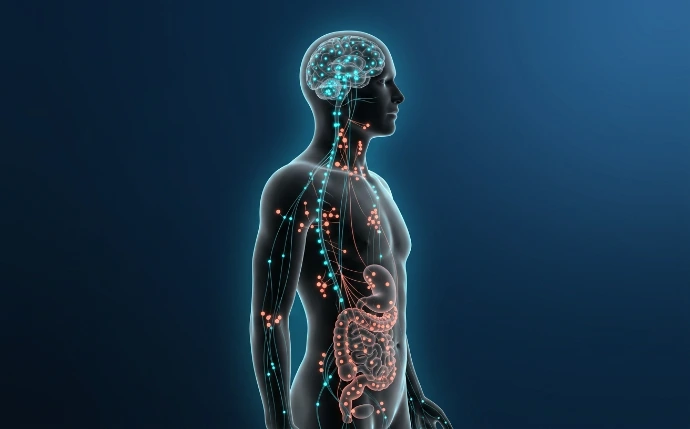
The body's own cannabinoid system is involved in regulating muscle tone, pain perception, sleep and immune processes. This very breadth of function is why cannabis compounds can address several symptom areas in MS at the same time, but they are regarded as a symptomatic add-on option and do not replace disease-modifying therapy.
The effect is best documented for muscle stiffness: nabiximols combines THC and CBD as a standardised oral spray and is approved in Germany and the EU as an add-on for moderate to severe spasticity when other antispastic medicines do not work well enough.
For nerve pain, sleep disorders and deep exhaustion, use is off-label. CBD-dominant medications often come first here because they are not psychoactive and are easy to adjust. THC-containing strains are used as a complement when the pattern of symptoms suggests it, for example with very marked sleep disorders. How well cannabis helps in the individual case varies from person to person and needs medical supervision.
Evidence
The data is comparatively good for treating muscle stiffness and varies in strength for other symptoms.
A systematic review of guidelines analysed 16 European guidelines on the treatment of spasticity and classifies nabiximols as an accepted second-line option when conventional antispastic drugs do not work well enough.
A German real-world analysis documented clinically relevant improvements in muscle stiffness, pain, sleep quality and bladder function under nabiximols over 12 weeks.
Legal situation
Medical cannabis has been available on prescription in Germany since 2017. In MS there is an important distinction between the approved indication and off-label use.
For moderate to severe MS spasticity, nabiximols is approved as an add-on when other antispastic medicines do not work well enough; cost coverage by German statutory health insurance is the rule here. For other MS symptoms such as nerve pain, sleep disorders or deep exhaustion, use is outside the approved indication (off-label), cost coverage is assessed case by case by the Medical Service of the health insurers, and the prescription is usually a private one.
Process
The decision for or against cannabis therapy is always made by the treating doctor, in coordination with neurology.
The form of the disease, current immunotherapy, previous symptomatic treatment and medication plan are discussed.
Muscle stiffness, nerve pain, sleep, fatigue and limitations in everyday life are recorded in a structured way.
The entire medication plan is checked for interactions, and a brief consultation with the treating neurologist is part of the procedure.
If suitable, a prescription is issued, for spasticity usually nabiximols as an approved add-on.
Treatment starts following the principle of start low, go slow and is adjusted after two to four weeks according to effect, tolerability and feedback from neurology.
Context
For MS spasticity, nabiximols as a standardised THC-CBD combination comes first. Other medications are assessed according to symptoms and much more individually.
Frequently asked questions
These answers give you initial orientation. The specific assessment for your situation is made by the treating doctor in coordination with your neurologist.
For moderate to severe MS spasticity, nabiximols (Sativex) is approved as an add-on when other antispastic medicines do not work well enough. Studies show improvements in muscle stiffness and associated symptoms such as pain and sleep under Sativex. Many MS patients on medically adjusted cannabis therapy also report a noticeable improvement in quality of life for nerve pain, sleep disorders and deep exhaustion. These off-label uses are assessed case by case.
For MS spasticity, nabiximols (Sativex) is the approved oral spray. For nerve pain, sleep and deep exhaustion, individually tailored cannabis medications may be considered. CBD-dominant strains often come first because they are not psychoactive and are easy to adjust. THC-containing strains are added when the pattern of symptoms suggests it. The choice is made individually in the initial consultation and in coordination with your neurologist.
No. Medical cannabis acts on symptoms and complements treatment. Disease-modifying therapy for MS (interferons, glatiramer acetate, fingolimod, ocrelizumab, cladribine and others) belongs in neurological care and is not replaced by cannabis compounds. Disease-modifying therapy may only be reduced or stopped in consultation with the treating neurologist.
Possible side effects are dizziness, a dry mouth, tiredness, mild problems concentrating and a temporary increase in heart rate, above all during the adjustment phase. In MS patients, balance, risk of falls and cognition are also closely monitored. That is exactly what medical supervision is for: a low starting dose, regular monitoring and immediate adjustment if necessary.
For the approved indication of MS spasticity with nabiximols, cost coverage by German statutory health insurance is the rule if the prerequisites (moderate to severe muscle stiffness, insufficient response to other antispastic medicines) are documented. For use outside the approved indication (off-label), the application is assessed case by case by the Medical Service of the health insurers. In the initial consultation Cureal helps you assess your chances and with the necessary documents.
Related topics
Multiple sclerosis often occurs together with other conditions. These topics are closely linked.
A chronic pain syndrome with marked exhaustion, with symptoms similar to those of MS.
Go to pageDepressive symptoms are a common comorbidity in MS patients and can be treated in their own right.
Go to pageNerve pain is a common accompanying symptom of MS, and the mechanisms of action overlap with cannabis pain therapy.
Go to pageIf spasticity, nerve pain, sleep disorders or fatigue persist despite neurological treatment, a medical consultation can clarify whether medical cannabis, in coordination with neurology, is an option for your situation.