Low mood
Persistent low mood, joylessness and loss of interest for weeks or longer.
Cureal treatment spectrum
Depression affects mood, drive, sleep, thinking and physical experience. Medical cannabis is not a primary treatment for depression, but it can be assessed by a doctor in selected individual cases for particular accompanying symptoms such as sleep disorders, anxiety or inner restlessness.
Context
Depression is a mental illness that can affect mood, drive, thinking, sleep and physical experience for weeks or longer. According to the WHO, around 280 million people are affected worldwide. In Germany, according to RKI data for 2024, around 17 per cent of adults received a diagnosis of depression in outpatient care, women considerably more often at 20.4 per cent than men at 12.8 per cent.
The illness can occur once or recur in episodes. Without maintenance therapy the relapse rate is high. The causes are an interplay of genetic predisposition, biological and neurochemical factors, stressful life events and physical illnesses and metabolic disorders.
Treatment is based on the German National Care Guideline on unipolar depression: psychotherapy, antidepressants depending on severity, and complementary measures. Cannabis does not replace this treatment and is at most considered as an option for clearly defined accompanying symptoms.

Symptoms
The core symptoms of depression belong in professional treatment. Cannabis therapy is only an option after a careful assessment of the diagnosis, course, accompanying symptoms and risks.
Persistent low mood, joylessness and loss of interest for weeks or longer.
Reduced resilience, waking early in the morning and the feeling of hardly being able to start even simple tasks.
Problems falling or staying asleep, circling thoughts and difficulty concentrating or making decisions.
Feelings of worthlessness or guilt, social withdrawal and, in severe cases, thoughts of death.
Tension, worry, feelings of panic or physical restlessness can occur as accompanying symptoms.
Suicidal thoughts or acute danger to yourself are emergencies. Immediate help in Germany: Telefonseelsorge (crisis line) 0800 111 0 111 or emergency number 112.
Diagnostic work-up
Depression is not identified by a blood test but through the pattern of symptoms, a questionnaire and the exclusion of physical causes.
The diagnosis is made by a specialist in psychiatry or by qualified psychotherapy professionals. It is based on a detailed consultation, a standardised depression questionnaire and a check for possible physical causes such as thyroid function, vitamin D deficiency or anaemia.
A confirmed diagnosis with an assessment of severity is a prerequisite for every further treatment decision, including the question of whether individual accompanying symptoms can be addressed medically with cannabis.
Conventional treatment
Treatment according to the German National Care Guideline rests on two pillars: psychotherapy and antidepressants as the first line, complemented by lifestyle measures.
Cognitive behavioural therapy, psychodynamic therapy or systemic therapy are considered the first choice. In moderate and severe episodes they are often combined with antidepressants such as SSRIs or SNRIs, for example citalopram, sertraline or venlafaxine. Side effects such as sexual dysfunction, weight gain or emotional blunting lead some patients to look for complementary options.
First choice according to the guidelineAlongside guideline therapy, the following measures can support the course of the illness:
Cannabinoid system
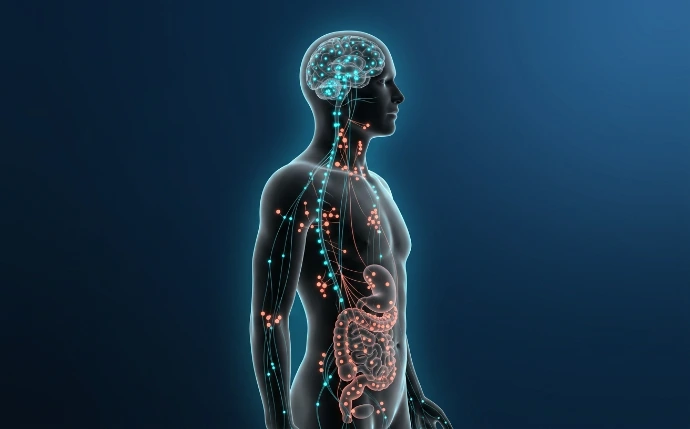
The endocannabinoid system is involved in stress processing, sleep, mood, pain processing and tension. This makes it theoretically relevant for accompanying symptoms of depression, even though it does not explain the illness itself.
THC is the psychoactive substance and can influence sleep and tension, but at higher doses it can worsen mood, anxiety and drive. CBD is not intoxicating and is discussed above all for anxiety, restlessness and sleep; on its own it has so far shown no clear benefit for the core symptoms.
According to current research, the evidence for an effect on the core symptoms of depression itself is limited. At Cureal, the focus is therefore on whether individual, clearly definable accompanying symptoms can be addressed medically within a stable treatment framework.
Evidence
Real-world analyses by research teams led by Specka (2024) and Ried (2023) show improvements in sleep and tension under real-life conditions, but relating to accompanying symptoms, not to the core symptoms of depression itself.
A systematic review of 54 high-quality comparative studies finds no significant effect of cannabis compounds on the core symptoms of depression.
With high doses of THC and an early start of use there is an increased risk of depression, a central argument for low starting doses and close medical monitoring.
Legal situation
Medical cannabis has been available on prescription in Germany since 2017, and the change in the law in 2024 made access easier still for patients.
Depression is one of the indications outside the approved use (off-label). Cost coverage by German statutory health insurance is assessed case by case; in practice, cannabis therapy for depression is usually on a private prescription and is limited to clearly defined situations.
Process
At Cureal, cannabis on prescription for depression is not a standard prescription: the decision for or against it is made with particular caution, because mood, drive and anxiety must be closely observed.
The diagnosis of depression, its severity, current treatment and acute warning signs of a crisis are reviewed.
Psychotherapy, antidepressants, sleep problems, anxiety, inner restlessness and previous treatment attempts are discussed.
Interactions with antidepressants, previous mental illness, suicide risk and sensitivity to THC are assessed with particular care.
If the treatment is justifiable, a prescription can be issued with clear dosing instructions and a very low starting dose.
Mood, sleep, anxiety, side effects, suitability for everyday life and fitness to drive are closely monitored.
Context
In depression it is not the diagnosis alone that decides, but the exact situation: sleep, anxiety, current medication, severity, stability and individual sensitivity to THC.
Frequently asked questions
These answers give you initial orientation. The specific assessment for your situation is made by the treating doctor.
Medical cannabis is not a primary treatment for depression. Some patients report improvements in accompanying symptoms such as sleep disorders or anxiety. For the core symptoms themselves, the data is limited. An individual medical assessment decides whether cannabis may be an option as a complement to existing treatment.
In selected individual cases, CBD-dominant strains or combination products with a fixed THC-CBD ratio are used because they are not psychoactive or only slightly so. In depression, THC is dosed very low and adjusted cautiously. The decision is made individually and exclusively by a doctor.
Inhaled cannabis usually works within a few minutes and lasts two to four hours. Cannabis oils or capsules work more slowly, after about 30 to 90 minutes, but last longer. For accompanying symptoms such as sleep disorders or tension, a stable effect usually only becomes apparent after a few weeks of cautious adjustment.
High doses of THC can weigh on mood, drive and anxiety. Current studies show that caution is needed especially with an early start of use and high doses. Treatment therefore needs a very low starting dose, medical follow-up monitoring and clear criteria for stopping if things get worse.
Possible side effects are dizziness, a dry mouth, tiredness, mild problems concentrating and a temporarily faster heartbeat. In depression, mood and drive are observed particularly closely. If things get worse, therapy is adjusted without delay.
Compared with opioids and benzodiazepines, the potential for physical dependence is low. Psychological habituation can develop, especially with permanently high doses of THC. Within a therapeutic framework with medical dose control, the risk is considerably reduced. Anyone stopping therapy should do so gradually and in consultation with the treating doctor.
A combination may be possible in individual cases but requires a careful check for interactions. SSRIs, SNRIs and other antidepressants in some cases interact with cannabis compounds via the same metabolic pathway in the body. Before any change to therapy, all medicines currently being taken must be discussed openly.
No. Medical cannabis does not replace antidepressants and is not a primary treatment for depression. According to current research, the evidence for an effect on the core symptoms of depression itself is limited. For individual accompanying symptoms such as sleep disorders, cannabis can be assessed by a doctor as a complement in selected individual cases, and treatment with psychotherapy and antidepressants remains unaffected.
Related topics
Depression often occurs together with other conditions. These topics are closely linked.
A common accompanying condition of depression. CBD is also discussed here as a possible complement.
Go to pageSleep problems are a core symptom of depression. Here the research on cannabis is stronger.
Go to pageA trauma-related disorder with partly overlapping symptoms and its own body of research.
Go to pageIf sleep disorders, anxiety or inner restlessness are a heavy burden despite ongoing treatment, a medical consultation can clarify whether medical cannabis is justifiable in your case.