Inner tension
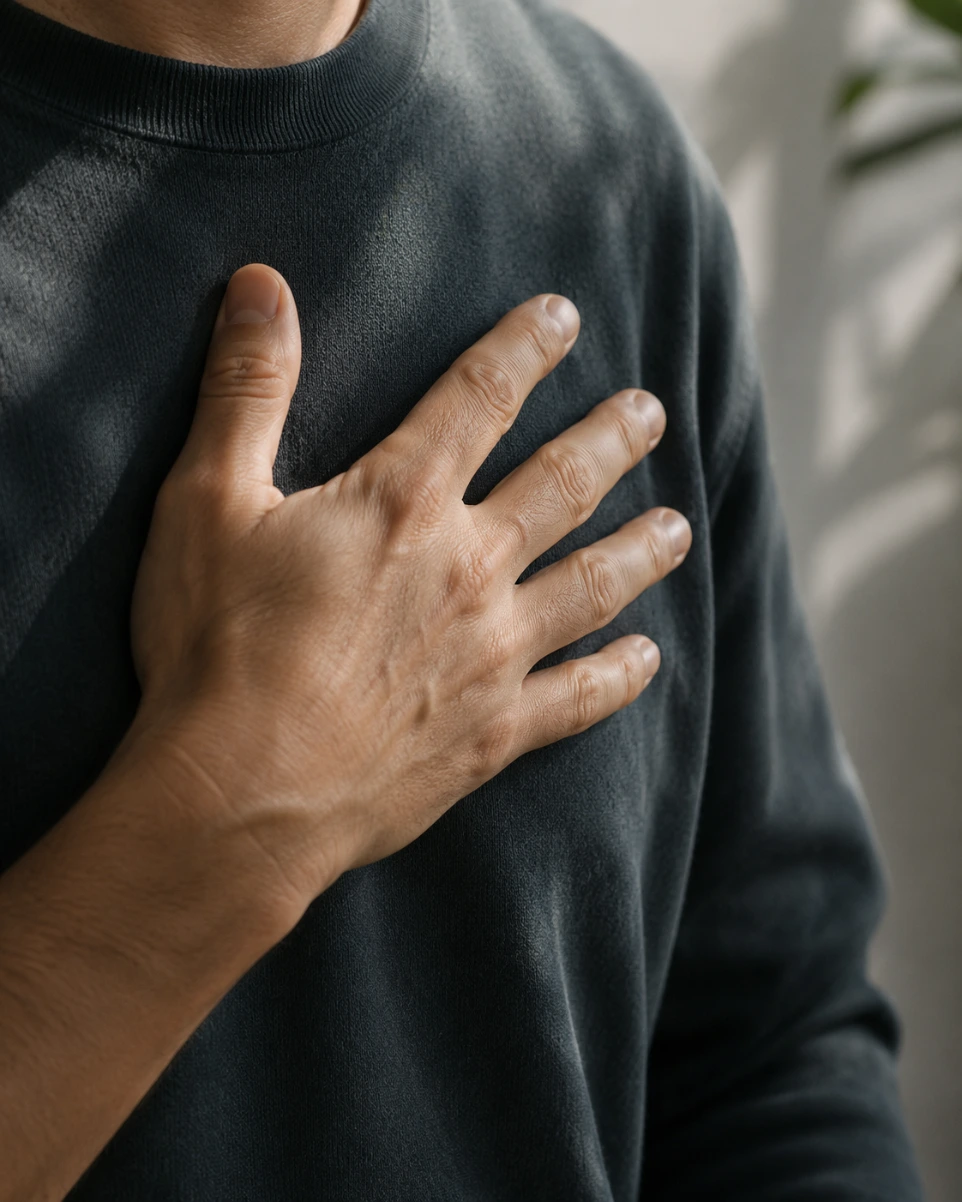
A permanently raised level of arousal, the feeling of being constantly on edge and finding it hard to switch off.
Cureal treatment spectrum
In generalised anxiety, social anxiety and panic disorder, medical cannabis can ease inner tension, reduce anxious rumination and allow calmer sleep when psychotherapy or SSRIs do not work well enough or are poorly tolerated. CBD-dominant medications come first during the day, and low-dose THC-containing medications may be considered as a complement for the evening.
Context
Anxiety disorders are mental illnesses in which anxiety is persistent, excessive or out of proportion to the situation that triggers it. In Germany more than 15 per cent of adults experience an anxiety disorder requiring treatment in the course of a year, women about twice as often as men. The methodological framework is provided by the German S3 guideline on anxiety disorders from the DGPPN.
The main forms include generalised anxiety disorder (persistent, free-floating worry), panic disorder (recurring, acute anxiety attacks with physical symptoms), social anxiety disorder (fear of being judged and of social situations), agoraphobia (fear of open places or places that are hard to leave) and specific phobias. Mixed forms are common.
Sleep disorders, problems concentrating, irritability, low mood and an increased risk of substance use often accompany anxiety disorders. It is precisely these accompanying symptoms that are the focus of a medically supervised cannabis therapy, above all where inner tension, anxious rumination and sleep disorders dominate everyday life.
Symptoms
Symptoms differ from person to person and range from physical reactions to circling thoughts. These points do not replace a diagnosis but help with an initial assessment.
A permanently raised level of arousal, the feeling of being constantly on edge and finding it hard to switch off.
Circling thoughts about negative scenarios, worst-case thinking and worries about health, work or relationships, often without a clear trigger.
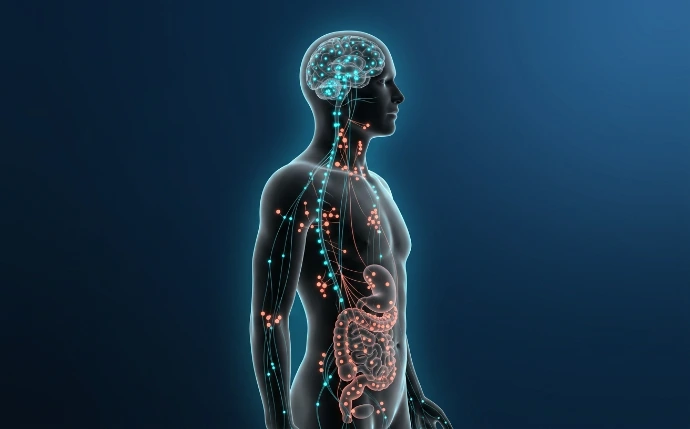
Palpitations, sweating, trembling, gastrointestinal complaints, tightness in the chest and shortness of breath.
Sudden, intense peaks of anxiety with a feeling of losing control, which call for a careful differential diagnosis.
Situations, places or people are avoided, everyday life becomes narrower, and limitations arise at work and socially.
Anxious rumination in the evening makes it harder to fall asleep, and lack of sleep in turn increases tension during the day.
Diagnostic work-up
Anxiety disorders are identified through the pattern of symptoms and standardised questionnaires, and physical causes are specifically ruled out.
The diagnosis is made by a specialist in psychiatry and psychotherapy or an experienced psychotherapy practice. It is based on the German S3 guideline on anxiety disorders from the DGPPN, the ICD-10 and the DSM-5. The consultation is complemented by standardised questionnaires, such as the GAD-7 for generalised anxiety disorder, the Hamilton Anxiety Rating Scale or the Liebowitz Social Anxiety Scale.
Physical causes such as thyroid disorders, cardiovascular diseases or side effects of other medicines are ruled out by blood tests, an ECG and further examinations where necessary. In the area of anxiety disorders, Cureal works exclusively on the basis of an existing psychiatric or psychotherapeutic assessment and in close coordination with the treating practice.
Conventional treatment
Treatment follows the S3 guideline and has several layers. Medical cannabis complements these building blocks for persistent symptoms but does not replace them.
Cognitive behavioural therapy (CBT) is the first-line therapy for most anxiety disorders and, according to the research, has lasting effects; it is also available as an online programme. In terms of medication, SSRIs and SNRIs such as sertraline, escitalopram or venlafaxine are the first line.
Effect after 2 to 6 weeksIf SSRIs or SNRIs are not enough or are poorly tolerated, further options are available:
Cannabinoid system
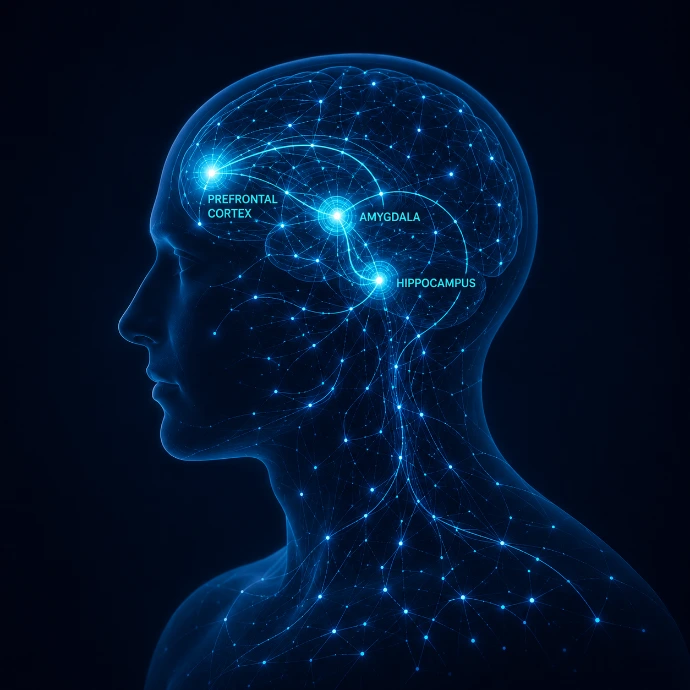
The body's own cannabinoid system (endocannabinoid system) is involved in processing stress and anxiety, emotional regulation and controlling the sleep-wake cycle. The body's own receptors are located, among other places, in the amygdala, the prefrontal cortex and the hippocampus, the brain regions central to how anxiety is evaluated and experienced.
Cannabidiol (CBD) is not psychoactive. Initial clinical studies point to anxiety-relieving effects, above all in social anxiety disorder and generalised tension, without a sedating effect during the day. CBD-dominant medications are therefore used during the day as an option compatible with everyday life.
Tetrahydrocannabinol (THC) can have a calming effect at a low dose and make it easier to fall asleep, but at too high a dose it can intensify anxiety (paradoxical effect). For patients with anxiety, a very cautious adjustment following the principle of start low, go slow therefore applies, usually as a combination product with a balanced THC/CBD ratio for the evening.
Evidence
Compared with chronic pain or epilepsy, the research is still developing, but it increasingly provides indications of positive effects, above all in generalised tension and social anxiety disorder.
Overall the body of data is small compared with SSRIs and behavioural therapy, but it consistently points towards positive effects, especially in patients with persistent tension or sleep-related anxiety symptoms. Individual adjustment, with the choice of active substance and dosage, is the decisive factor, which is exactly what medically supervised therapy provides.
Legal situation
Medical cannabis has been available on prescription since 2017. There is no approved finished cannabinoid medicine for anxiety disorders. It is used exclusively outside its approved indication (off-label), based on an individual medical decision.
Cost coverage by German statutory health insurance is assessed case by case, but is rare for an isolated anxiety disorder without another serious illness. Most patients with anxiety disorders pay for cannabis therapy privately.
Process
The decision for or against cannabis therapy is always made by the treating doctor in the individual appointment and in coordination with existing treatment.
Your history of anxiety, previous treatments such as psychotherapy or SSRIs and the currently dominant symptoms are discussed.
The entire medication plan is checked for interactions with SSRIs, SNRIs, benzodiazepines or pregabalin.
If the indication is suitable, the doctor issues a private prescription. The active substance, strain and dosage form, usually oil or capsules, are determined individually.
Treatment starts at a low dose following the principle of start low, go slow, because starting doses that are too high are counterproductive for patients with anxiety.
After two to four weeks the doctor reviews how tension, rumination and sleep are responding to therapy. Dosage and strain are adjusted if needed.
Context
There is no one-size-fits-all cannabis medication for anxiety disorders. The choice of active substance, dose and time of intake depend on the form of anxiety, daily rhythm, previous medication and risk profile.
Frequently asked questions
These answers give you initial orientation. The specific assessment for your situation is made by the treating doctor.
In many patients with anxiety disorders, medical cannabis can ease inner tension, reduce anxious rumination and relieve sleep-related anxiety symptoms. CBD-dominant medications are associated with anxiety-relieving effects without being psychoactive. Low-dose THC-containing combination products can contribute to calming in the evening as a complement. Studies such as the review by Berger and colleagues (2022) and the clinical study by Han and colleagues (2024) support these observations. The effect varies from person to person and depends heavily on the choice of active substance, the dose and the form of anxiety disorder.
The choice is made individually in the initial consultation. CBD-dominant medications are used during the day because they are not psychoactive, are easy to adjust and do not impair concentration. Combination products with a balanced THC/CBD ratio may be considered in the evening, especially when sleep-related anxiety symptoms are in the foreground. THC-only medications are used with restraint in patients with anxiety because doses of THC that are too high can intensify anxiety.
Yes, at doses that are too high THC can have a paradoxical effect and trigger anxiety, palpitations or feelings of panic instead of easing them. That is exactly why we start with very low doses in patients with anxiety, prefer combination products containing CBD and increase slowly (start low, go slow). If you have reacted to cannabis with anxiety or panic attacks in the past, you should say so openly, and we will then use pure CBD medications without THC.
With medical cannabis prescribed by a doctor at a therapeutic dose, the potential for physical dependence is considerably lower than with benzodiazepines such as lorazepam or diazepam. Psychological habituation is possible, above all with long-term use without medical supervision. It is important not to mix therapy with recreational use and to review the dose regularly. Particular caution is needed in patients with a current or past addiction, and this is part of the medical history.
Possible side effects are a dry mouth, tiredness (above all if the evening dose of THC is too high), mild dizziness, a temporary increase in heart rate or a temporary increase in anxiety during the adjustment phase. Most side effects depend on the dose and subside after adjustment. That is exactly what medical supervision is for: treatment starts at a low dose, with regular monitoring and adjustment if a dose is not right.
A combination is possible in many cases but requires careful medical supervision. CBD can affect how certain SSRIs and benzodiazepines are broken down by the liver, which can change their effects and side effects. Any adjustment of existing medication is made exclusively in coordination with the treating psychiatrist. In the initial consultation the entire medication plan is recorded and possible interactions are discussed openly.
Related topics
Anxiety disorders often occur together with other conditions. These topics are closely linked.
Anxiety and depression often reinforce each other. Cannabis therapy can relieve both levels when tension and low mood occur together.
Go to pageAnxious rumination in the evening is one of the most common reasons for problems falling asleep. There is a separate body of research on cannabis for sleep disorders.
Go to pagePost-traumatic stress reactions often come with anxiety disorder as an accompanying symptom. In patients with PTSD, cannabis can address nightmares, hyperarousal and anxiety components at the same time.
Go to pageIf tension, rumination or sleep disorders are a burden despite existing treatment, a medical consultation can clarify whether medical cannabis may be an option for your situation as a complement.