Re-experiencing
Flashbacks, intrusive memories or nightmares in which the distressing event becomes present again, often accompanied by palpitations or sweating.
Cureal treatment spectrum
In post-traumatic stress disorder, medical cannabis can reduce nightmares, calm inner hyperarousal and stabilise sleep, above all when conventional antidepressants do not work well enough or sleeping pills are not an option because of their potential for dependence. Cannabis does not replace trauma-focused psychotherapy such as EMDR or trauma-focused CBT, but may be considered as a complementary symptom therapy. At Cureal, the treating doctor assesses in the initial consultation whether cannabis therapy fits your diagnosis, your ongoing trauma therapy and your existing medication.
Context
Post-traumatic stress disorder (PTSD) is a mental illness that can develop after one or more extremely distressing events, for example after accidents, experiences of violence, serious illnesses, deployment or experiences of fleeing. It is defined under ICD-10 F43.1 and comprises four symptom clusters: re-experiencing the trauma, avoidance behaviour, persistently altered mood and perception, and constant hyperarousal with being easily startled, sleep problems and increased irritability.
In Germany the annual prevalence is two to three per cent and the lifetime risk seven to eight per cent. Women are affected about twice as often as men, and in high-risk groups such as refugees, emergency workers or survivors of serious accidents the rates are considerably higher.
Depression, anxiety disorders, sleep disorders, chronic pain and addiction are more common in patients with PTSD than in the general population. These accompanying symptoms are among the focal points of a medically supervised cannabis therapy.

Symptom areas
Symptoms differ from person to person and often only appear weeks or months after the triggering event. These points do not replace a diagnosis.
Flashbacks, intrusive memories or nightmares in which the distressing event becomes present again, often accompanied by palpitations or sweating.
Places, people, topics or situations that are reminders of what happened are avoided. Over time, the space you live in becomes narrower.
Problems falling asleep, frequent waking at night and recurring nightmares are among the most distressing symptoms and a central area of use for medical cannabis.
A permanently raised level of arousal, being startled by sudden noises, quick irritability and the feeling of being constantly on alert.
Depression, anxiety disorders, chronic pain and addiction often occur together with PTSD and are part of the medical history.
Poor sleep and constant hyperarousal lower resilience, tolerance of therapy and stability in everyday life.
Diagnostic work-up
PTSD is not identified by a blood test but through a structured specialist consultation and standardised diagnostic instruments.
The diagnosis is made by a specialist in psychiatry and psychotherapy or an experienced psychotherapy practice. It is based on the German S3 guideline on post-traumatic stress disorder from the DeGPT, ICD-10 F43.1 and the DSM-5.
The consultation is complemented by structured interviews such as the Clinician-Administered PTSD Scale (CAPS-5) and self-report questionnaires such as the PTSD Checklist (PCL-5) or the Impact of Event Scale-Revised (IES-R). Reliable trauma diagnostics take into account the triggering event, the course of symptoms over time and the impact on work, family and everyday life.
In the area of PTSD, Cureal works exclusively on the basis of an existing trauma diagnosis and in close coordination with ongoing trauma therapy.
Conventional treatment
Treatment follows the S3 guideline and has several layers. Medical cannabis complements these building blocks for persistent symptoms but does not replace them.
Trauma-focused psychotherapy such as EMDR, trauma-focused CBT or narrative exposure therapy has the best evidence and is considered the first-line approach. In addition, antidepressants such as sertraline, paroxetine or venlafaxine are used; their effect usually only sets in after several weeks and often remains limited for nightmares.
In patients with persistent nightmares, ongoing hyperarousal or sleep disorders related to pain and anxiety, medical cannabis may be considered as a complement in individual cases, always in coordination with trauma therapy and psychiatric treatment.
Cannabinoid system
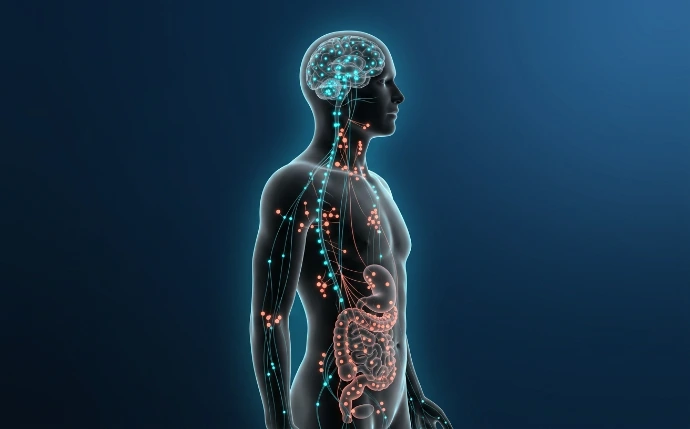
The body's own endocannabinoid system is involved in processing stress and anxiety, fear conditioning, fear extinction and controlling the sleep-wake cycle. The body's own receptors where cannabis acts are located, among other places, in the amygdala, the prefrontal cortex and the hippocampus, exactly the regions that are dysregulated in PTSD. Work by Shin and colleagues (2006) and the review by Gordon (2019) set out this neurobiological basis.
THC-containing medications can reduce the frequency and intensity of trauma-related nightmares. A Canadian study of nabilone for PTSD nightmares (Cameron and colleagues, 2014) describes a clear reduction in the frequency of nightmares under the synthetic THC analogue nabilone in veterans with treatment-resistant PTSD. The mechanism of action is attributed to a modulation of REM sleep, the phase in which most trauma nightmares occur. THC-containing medications are therefore used in the evening, started at a low dose and titrated individually.
CBD-dominant medications are associated with anxiety-relieving and tension-reducing effects and may be considered during the day as an option compatible with everyday life for persistent hyperarousal, being easily startled or generalised tension. Reviews by Rehman and colleagues (2021) and Mondino and colleagues (2021) describe indications of reduced hyperarousal symptoms under medically adjusted cannabis therapy. A real-world data analysis by Legare and colleagues (2022) confirms this picture across several indications, including PTSD.
Evidence
Compared with trauma psychotherapy and antidepressants the body of data is still small, but it consistently points towards positive effects on nightmares and hyperarousal.
Legal situation
Medical cannabis has been available on prescription in Germany since 2017. There is no approved finished cannabinoid medicine for PTSD; it is used exclusively outside its approved indication (off-label), based on an individual medical decision.
Cost coverage by German statutory health insurance is assessed case by case. With proven treatment resistance and comorbidities the prospects are somewhat better than with isolated anxiety disorders, but there is no guarantee. Most patients therefore pay for cannabis therapy privately.
Process
The decision requires an existing diagnosis, an honest history of medication and any addiction, and clear symptom goals. Cannabis does not replace trauma therapy.
An existing PTSD diagnosis, current trauma therapy, psychiatric treatment and the course of symptoms are reviewed.
Nightmares, sleep quality, hyperarousal, tension, pain and limitations in everyday life are specifically prioritised.
SSRIs, SNRIs, prazosin, sleeping pills, benzodiazepines and other medicines are checked for interactions.
Past or current substance problems are discussed openly and without judgement, because they can change the treatment decision.
Dose, tolerability, sleep, daytime tiredness, re-experiencing and the interplay with trauma therapy are monitored.
Context
There is no standard medication for PTSD. The choice depends on whether nightmares, sleep, hyperarousal or tension are in the foreground.
Frequently asked questions
These answers give you initial orientation. The specific assessment for the individual situation is made by the treating doctor.
In many patients with PTSD, medical cannabis can reduce the frequency and intensity of trauma-related nightmares, calm inner hyperarousal and stabilise sleep. THC-containing medications are usually used in the evening because they can relieve nightmares by modulating REM sleep. CBD-dominant medications may be considered during the day to reduce tension. The randomised crossover study by Cameron and colleagues (2014) on nabilone for PTSD nightmares and the reviews by Rehman (2021) and Mondino (2021) support these observations.
The choice is made individually in the initial consultation and depends on the dominant symptoms. For marked nightmares and sleep disorders, THC-containing medications in the evening come first, started at a low dose and increased slowly. For persistently increased hyperarousal and generalised tension, CBD-dominant medications may be considered during the day as an option compatible with everyday life. Combination products with a balanced THC-CBD ratio are in many cases the practical solution for a day-night strategy.
No. Cannabis is a complementary symptom therapy and no substitute for trauma-focused psychotherapy such as EMDR, trauma-focused CBT or narrative exposure therapy. These approaches remain the first line. Cannabis can make it easier to engage in trauma therapy by reducing sleep problems, hyperarousal and nightmares, which increases resilience for the actual trauma work. The combination of trauma therapy and medication-based symptom relief follows the guideline-based multi-pillar model.
In patients with a past or current addiction (alcohol, recreational cannabis use, opioids, benzodiazepines), particular caution is needed, and this is part of the medical history. This history is discussed openly and without judgement, and the approach is adapted accordingly. In some situations a pure CBD therapy without THC is the right solution, in others cannabis is not the suitable option and a different symptom therapy makes more sense. This decision is made together with the trauma therapy practice.
Possible side effects are a dry mouth, tiredness the next day (above all if the evening dose of THC is too high), mild dizziness, a temporary increase in heart rate or a temporary increase in tension and re-experiencing during the adjustment phase. That is exactly what medical supervision is for: adjustment starts at a low dose, is closely monitored in the first weeks and is adapted if needed. In very rare cases cannabis can intensify dissociative symptoms in vulnerable patients; this is covered in the medical history.
Related topics
PTSD often occurs together with other conditions. These topics are closely linked.
Generalised anxiety and panic often occur as accompanying conditions in PTSD. Cannabis therapy can address hyperarousal and anxiety components at the same time.
Go to pageTrauma and depressive episodes often reinforce each other. Both levels need to be treated in parallel, and cannabis therapy can complement this.
Go to pageNightmares and problems staying asleep are core symptoms of PTSD. Cannabis in the evening can make sleep possible again.
Go to pageIf nightmares, hyperarousal or sleep problems remain a heavy burden despite trauma therapy and antidepressants, a medical consultation can clarify whether medical cannabis is justifiable as a complement in the individual situation.