Focal seizures
Seizures that begin in a defined region of the brain. Symptoms depend on the area of the brain affected and range from twitching to disturbances of consciousness.
Cureal treatment spectrum
Epilepsy belongs in neurological care. Highly purified cannabidiol is approved as an add-on therapy for certain severe forms of epilepsy. For other forms, cannabis therapy can only be considered in individual cases and in close coordination with your neurologist.
Context
Epilepsy is a disease of the brain in which nerve cells are at times overexcited and send out signals in an uncontrolled way. According to data from the German Society for Epileptology, around 500,000 to 600,000 people in Germany live with epilepsy. About two thirds become seizure-free with anti-seizure medication, while the remaining third are considered treatment-resistant and often look for complementary options.
The triggers are varied: genetic factors, brain damage in early childhood, strokes, tumours, metabolic diseases or brain injuries can play a role. In some of those affected the cause remains unclear (idiopathic epilepsy).
Besides the seizures themselves, cognitive changes, mood swings, sleep disorders and the possible loss of fitness to drive weigh on everyday life. It is precisely these accompanying symptoms that are among the focal points of a complementary cannabis therapy.

Seizure types and symptoms
The type of seizure, previous therapy and accompanying symptoms differ from person to person. These points do not replace a diagnosis but help with an initial assessment.
Seizures that begin in a defined region of the brain. Symptoms depend on the area of the brain affected and range from twitching to disturbances of consciousness.
Seizures that affect both halves of the brain at the same time. Loss of consciousness is common, up to seizures with convulsions.
Lapses of consciousness lasting seconds, often in childhood and adolescence, less common in adults but possible.
Exhaustion, confusion, headaches or temporary neurological deficits can follow. Changes in mood and sleep often occur as comorbidities.
Lack of sleep, stress, alcohol or, in photosensitive forms, flickering light can be relevant depending on the type of seizure.
Freedom from seizures, medication and reaction time must be assessed separately from the question of cannabis.
Diagnostic work-up
Diagnosis is the responsibility of neurology and is the prerequisite for every further treatment decision.
The diagnosis is based on a precise medical history, an account from relatives, an EEG, an MRI scan and blood tests where necessary. The aim is to narrow down the type of seizure and to identify causes that can be treated specifically.
Once the diagnosis has been made and basic therapy has been adjusted, a complementary cannabis therapy can be considered for selected accompanying situations. In the area of epilepsy, Cureal works exclusively in close coordination with the treating neurology practice or hospital.
Conventional treatment
Treatment follows the guideline of the German Society of Neurology (DGN) and has several layers. Medical cannabis complements these building blocks but does not replace them.
First-line therapy with anti-seizure medication such as levetiracetam, lamotrigine, valproate, carbamazepine or topiramate, selected individually according to the type of seizure. If needed, specialised procedures complement drug treatment.
For Dravet syndrome, Lennox-Gastaut syndrome and tuberous sclerosis, a rare hereditary disease with tumours in several organs, highly purified cannabidiol is approved as a finished medicine (Epidyolex). For other forms, use is off-label and must be assessed case by case.
Epidyolex approved for 3 syndromesCannabinoid system
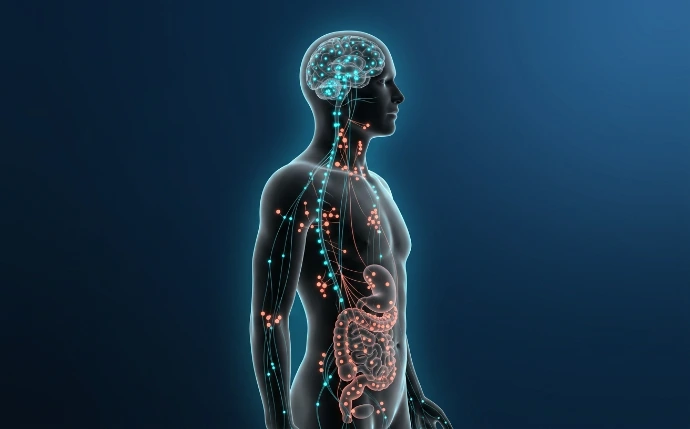
The body's own endocannabinoid system is involved in regulating neuronal excitability. The body's own receptors where cannabis acts influence the balance between excitation and inhibition in the brain.
Cannabidiol also acts via further receptors in the body, which may explain its seizure-dampening effect. CBD is not intoxicating and is assessed differently from THC in epilepsy. This very breadth of function is the biological basis for the proven benefit of CBD in certain severe forms of epilepsy.
For Dravet syndrome, Lennox-Gastaut syndrome and tuberous sclerosis, highly purified CBD is approved in Germany and the EU as a finished medicine (Epidyolex), and its efficacy as an add-on therapy has been shown in high-quality comparative studies. For other forms of epilepsy, such as focal epilepsies in adults, the data is weaker and use remains an off-label decision in the individual case.
Evidence
The research on cannabidiol in epilepsy is among the most robust in the field of cannabis therapy, although it differs markedly by indication.
Real-world data from patients with Dravet and Lennox-Gastaut syndrome on Epidyolex show an average reduction in motor seizures of 56.7 per cent after six months and 60.0 per cent after twelve months.
Analysis of 159 Lennox-Gastaut, 34 Dravet and 9 tuberous sclerosis cases over 12 months: data on continuation of therapy and overall course under CBD add-on therapy.
Legal situation
Medical cannabis has been available on prescription in Germany since 2017. In epilepsy, cannabidiol has a special role: for Dravet syndrome, Lennox-Gastaut syndrome (from 2 years of age) and tuberous sclerosis (from 2 years of age), highly purified cannabidiol is approved as a finished medicine (Epidyolex). Cost coverage by German statutory health insurance is the rule here.
For other forms of epilepsy, use is outside the approved indication (off-label). Cost coverage is then assessed case by case by the Medical Service of the health insurers.
Process
Cannabis on prescription for epilepsy is always a decision that fits in with neurological treatment and is based on the type of seizure, medication plan and course.
The type of seizure, diagnosis, previous neurological findings and current basic therapy are reviewed.
Seizure frequency, triggers, accompanying symptoms and response to previous therapy are discussed in a structured way.
Anti-seizure medication, especially clobazam or valproate, is checked for interactions and the need for monitoring.
Treatment starts at low doses following the principle of start low, go slow. If the indication is suitable, Epidyolex or a CBD-dominant medication can be prescribed.
The seizure diary, side effects, laboratory values, fitness to drive and feedback from neurology are monitored over time.
Context
In epilepsy, CBD comes first. THC-containing medications are viewed with great restraint, because effect, side effects and fitness to drive are particularly sensitive issues.
Cannabis therapy for epilepsy is dominated by CBD. THC plays a minor role: it is only an option in individual cases, for example with accompanying muscle stiffness or certain types of pain, and is used with great restraint in epilepsy. Which medication is suitable in the individual case is decided by the treating doctor in coordination with your neurologist.
Frequently asked questions
These answers give you initial orientation. The specific assessment for your situation is made by the treating doctor in coordination with your neurologist.
For three severe epilepsy syndromes, Dravet syndrome, Lennox-Gastaut syndrome and tuberous sclerosis, highly purified cannabidiol is approved as a finished medicine (Epidyolex) for add-on therapy, and its efficacy has been shown in high-quality comparative studies. Real-world data document average reductions in seizure frequency over six and twelve months. For other forms of epilepsy, cannabis may be an option as a complement in individual cases; the evidence here is weaker and use is outside the approved indication (off-label).
For the approved indications, Epidyolex (highly purified cannabidiol) is the medicine of choice. For off-label use, CBD-dominant medications also come first, because they are not psychoactive and are easy to adjust. THC-containing medications are used with great restraint in epilepsy and are only an option in individual cases, for example with accompanying muscle stiffness or certain types of pain. The choice is made individually in the initial consultation and in coordination with your neurologist.
There is no general strain recommendation for epilepsy. Therapy is dominated by CBD: for the approved indications, Epidyolex, a highly purified finished cannabidiol medicine, is the medicine of choice. For off-label use, CBD-dominant medications also come first. Which specific medication may be considered in the individual case is decided by the treating doctor in coordination with your neurologist.
With CBD-containing medications an initial response can usually be assessed after a few days to two weeks, and full adjustment generally takes four to six weeks. With Epidyolex the dose is increased gradually according to the summary of product characteristics. At the follow-up appointment after two to four weeks, the dose is adjusted on the basis of the seizure diary and laboratory values.
The dosage of CBD in epilepsy is adjusted individually by a doctor. Treatment starts following the principle of start low, go slow: begin with low doses and increase the amount step by step. With Epidyolex the dose is increased gradually according to the summary of product characteristics. Adjustments are guided by the seizure diary, laboratory values and individual tolerability. Specific doses cannot be given in general terms, as they depend on the individual case.
Cannabidiol can interact with several anti-seizure medicines. Particularly relevant are clobazam, whose effect can be intensified, and valproate, with which liver values can rise. Other anti-seizure medicines can also interact via the same metabolic pathway in the body. That is why treatment starts at a low dose, laboratory values are checked regularly and therapy is adjusted if needed.
For the approved indications, Dravet syndrome, Lennox-Gastaut syndrome and tuberous sclerosis, cost coverage by German statutory health insurance is the rule. For off-label use, the application is assessed case by case by the Medical Service of the health insurers. In the initial consultation we offer an assessment of the chances of success and support with the necessary documents.
In epilepsy, besides the question of cannabis, there is the question of fitness to drive with regard to seizures. Each type of seizure has its own waiting periods after a seizure. Anyone whose reaction time is additionally impaired by cannabis therapy must not take part in road traffic. Especially at the start of therapy and after dose adjustments, reaction time is often reduced. Recommendation: do not drive yourself during the first days of adjustment and, if in doubt, ask your neurologist.
Related topics
Epilepsy often occurs together with other conditions. These topics are closely linked.
In tuberous sclerosis, accompanying tumours can occur. Supportive cannabis therapy can overlap here.
Go to pageIn some genetic epilepsy syndromes, ADHD symptoms occur as a comorbidity.
Go to pageThe second indication with an approved finished cannabinoid medicine: Sativex for muscle stiffness (spasticity).
Go to pageIf questions about CBD, off-label use or accompanying symptoms remain despite neurological treatment, a medical consultation can clarify whether medical cannabis is justifiable in your case.